



Why Door Reinforcement Kits Matter for Home Security
Forced entry through doors remains one of the most common ways intruders gain access to homes. A door reinforcement kit strengthens the weak points where doors fail under pressure: the strike plate, door jamb, and hinges. These kits transform standard doors into barriers that resist kick-ins and prying attempts, buying critical time to call for help.
Door reinforcement kits appeal because they're simple and effective. Unlike expensive security systems requiring professional installation and ongoing fees, these kits work passively with no power, subscriptions, or maintenance beyond occasional inspection. Most homeowners can install them in under 30 minutes using basic tools.
Door Armor has built its reputation on this principle: making entry point security accessible to anyone willing to spend an afternoon on installation. The brand's patented galvanized steel system addresses structural failures that allow doors to fail under force, and its police-tested design has secured over 500,000 doors across the country.
However, door reinforcement kits aren't all the same. Understanding which solution fits your specific door type, budget, and security concerns is the first step toward reducing your home's vulnerability.
Best Door Reinforcement Kits for Different Door Types
Entry doors come in different configurations, each presenting unique security challenges. The best reinforcement kit matches your door's specific weak points.
Single Door Security Solutions
Single entry doors are the most straightforward to reinforce because they have a clear jamb structure to work with. Reinforcement focuses on three failure points: the strike plate where the lock bolt meets the frame, the hinges that can be pried apart, and the jamb itself which can be split by force.
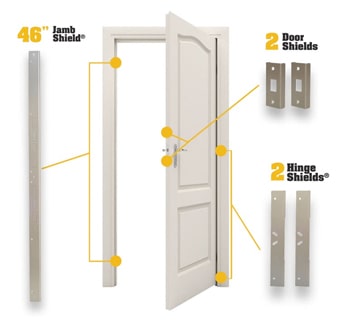
The Door Armor Single Door Security Set ($79.00) targets all three areas in one kit. It includes heavy-duty screws, hinge shields that prevent prying, and a reinforced strike plate assembly. The galvanized steel construction resists corrosion and maintains protective properties for years. Installation involves removing existing hardware, positioning new components, and driving screws into solid wood, a task most homeowners complete in under 30 minutes.
A standard interior door jamb is typically 3/4 inch of soft wood. When someone kicks near the lock, the force concentrates on this narrow jamb, which splinters easily. A reinforcement kit extends the strike plate deeper into the frame and uses longer, thicker screws that anchor into the structural framing behind the jamb, transforming the failure point into the solid structure of the house itself.
Double Door and Side Light Protection
Double doors and doors with side lights present different challenges because they lack the center jamb that single doors rely on. Side lights create openings that can't be secured by traditional strike plates.
The Door Armor Side Light Door Security Kit ($129.00) creates artificial jamb support where none exists. The Sidelight Jamb Shield screws directly into the frame face, creating rigidity that a real jamb would provide.
The Door Armor Double Door Security Kit ($149.00) includes a Night Lock door barricade that physically blocks both doors from opening. This barricade works independently of the lock mechanism, adding a mechanical barrier that prevents doors from being forced inward even if locks fail.
Sliding Glass Door Security
Sliding glass doors can be lifted off their track or forced along it. Traditional deadbolts don't address this vulnerability.
The Armor Latch Sliding Door Deadbolt ($39.99) uses a heavy-duty locking mechanism to prevent the door from sliding along its track. Installation involves drilling a hole through the door frame and mounting the bolt mechanism, a process taking 10-15 minutes.
Sliding door security works best as part of a layered approach: a deadbolt that prevents sliding, security film on the glass to resist breaking, and perhaps a security bar that blocks the track entirely.
How to Make a Door Kick-In Proof: Installation and Hardening
Making a door kick-in proof involves understanding the sequence of failure and then addressing each weak point systematically.
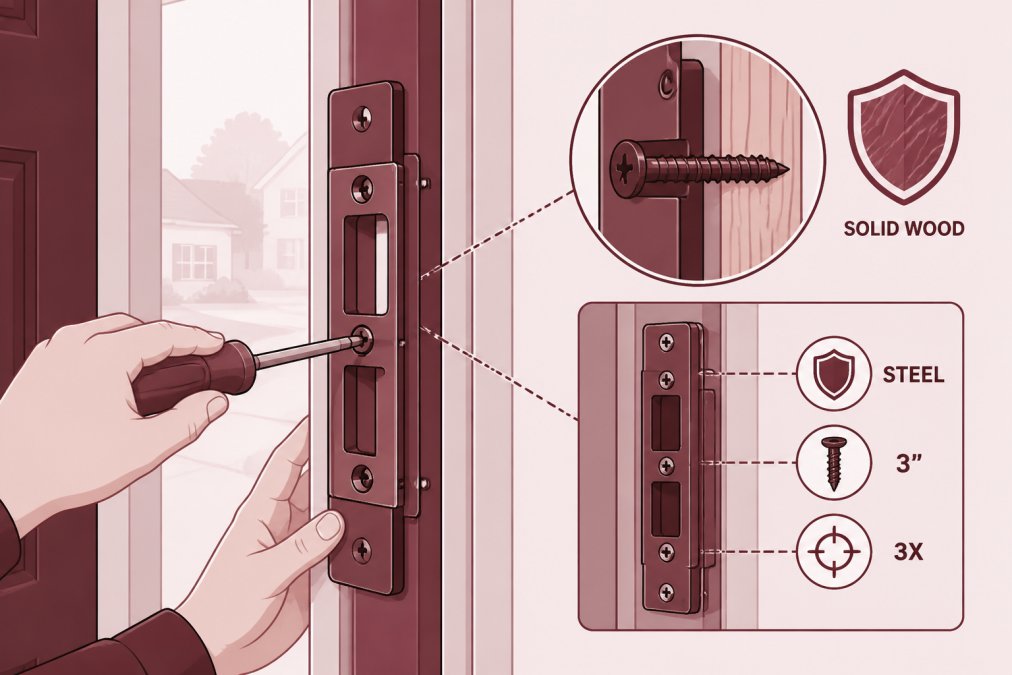
Close-up of hands installing reinforcement hardware on an exterior door frame, showing the strike plate assembly being secured with heavy-duty screws into solid wood framing, natural daylight from the entrance
First, identify which doors need reinforcement. Most break-ins occur at entry points visible from the street but not from neighboring properties, typically front doors and back doors. Prioritize based on visibility and accessibility.
Next, measure your door thickness and frame depth. Most residential doors are 1-3/8 inches or 1-3/4 inches thick. This information ensures you order the correct kit size.
Installation follows a consistent pattern. Remove the existing strike plate by unscrewing it from the frame. Position the new strike plate assembly, which typically extends deeper into the frame and uses longer screws. Drive new screws through the strike plate into the solid wood or structural framing behind the jamb. Replacing short 1-inch screws with 3-inch screws that penetrate deep into the frame is often the most significant security improvement.
Next, reinforce the hinges by installing hinge shields that accept longer screws reaching structural framing. Finally, address the door jamb itself if the kit includes jamb reinforcement. Metal plates distribute impact across a wider area, reducing stress concentration.
After installation, test the reinforcement by applying firm pressure to the door near the lock. A properly reinforced door should feel solid with no flex in the frame. The time investment typically ranges from 30 to 60 minutes per door.
Door Security Bar vs Reinforcement Kit: Which Works Better
A door security bar and a reinforcement kit address forced entry through different mechanisms.
A door security bar is a portable device that wedges against the door from inside, preventing it from opening. It's inexpensive, requires no installation, and works on any door type. However, it only works when you're inside and remember to install it.
A door reinforcement kit modifies the door and frame to resist forced entry from outside. It works 24/7, whether you're home or away. For vacation properties or rental units that sit empty for extended periods, a reinforcement kit provides protection when you can't be present.
Security bars also have physical limitations. They work best on doors that open inward with sufficient space in front for the bar to wedge properly. Sliding glass doors, double doors, and doors opening into tight spaces may not accommodate standard security bars.
The cost difference is modest. A quality security bar costs $30-60, while a door reinforcement kit costs $40-150 depending on door type. The most effective approach combines both: a reinforcement kit that hardens the door structure and a security bar for additional protection when you're home.
What Makes Door Armor Stand Out From Competitors
Door Armor's approach differs from other kits in several concrete ways affecting both security and user experience.
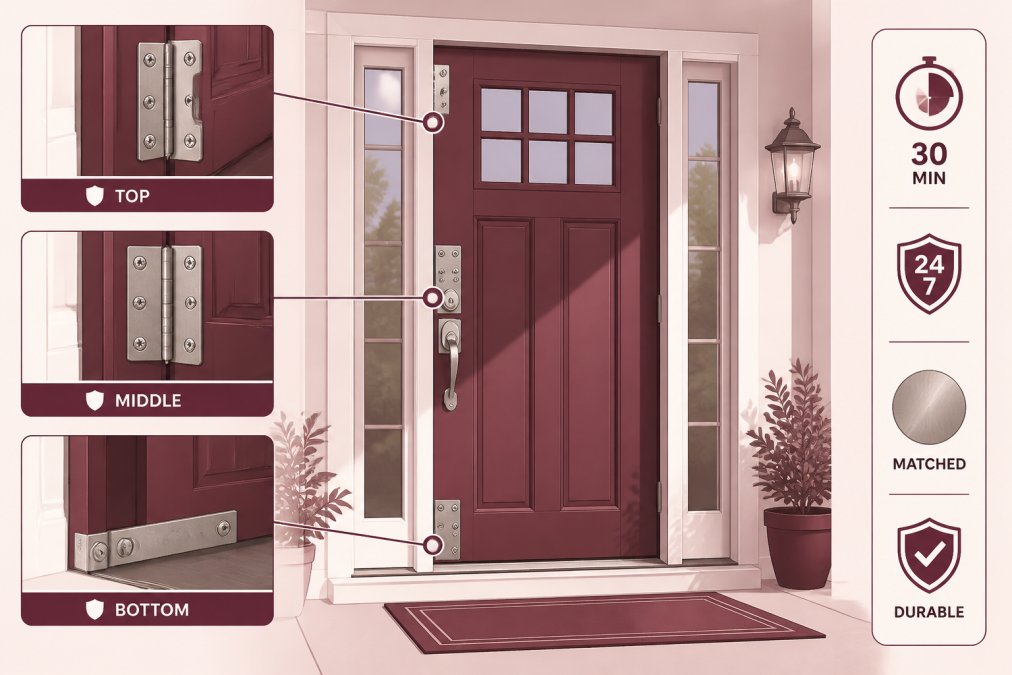
Wide shot of a reinforced residential front door with installed security hardware, showing how the galvanized steel components blend seamlessly with traditional brushed nickel hinges and hardware, afternoon sunlight on the entryway
The galvanized steel construction is the first distinction. Many competing kits use zinc-plated steel or painted hardware that corrodes over time. Galvanized steel undergoes a hot-dip process creating a thick, durable coating resistant to rust and corrosion.
The design is intentionally discreet. Door Armor hardware is finished to match standard brushed nickel or satin finishes commonly found in residential homes. Components blend into existing door hardware rather than announcing themselves as security devices.
The $500 Lifetime Guarantee against kick-ins is unusual in the industry. Most kits come with limited warranties covering manufacturing defects. Door Armor's guarantee covers performance, if the door is kicked in after proper installation, the company covers repair costs up to $500.
Police testing and recommendation is another differentiator. Door Armor has undergone actual testing by police departments as part of community security programs, providing validation from professionals who respond to break-ins.
Installation, Aesthetics, and Long-Term Durability
The installation experience shapes whether homeowners actually complete the security upgrade. Door Armor kits are designed around this reality.
The tools required are minimal: a screwdriver, a drill for pre-drilling screw holes, and basic measuring tools. The instruction set is visual-heavy, with step-by-step photos showing where each component goes.
Aesthetics matter more than security marketing typically acknowledges. Door Armor addresses this by offering finishes in brushed nickel and satin stainless that match contemporary hardware. Components look like standard door hardware, not specialized security equipment.
Long-term durability depends primarily on material and finish. Galvanized steel resists corrosion in most climates. Hardware should be inspected annually and any corroded areas treated with rust inhibitors. Screws are the most likely component to fail through corrosion or loosening from vibration.
| Reinforcement Component | Expected Lifespan | Maintenance | Failure Mode |
|---|---|---|---|
| Galvanized strike plate | 20+ years | Annual inspection | Surface corrosion in salt environments |
| Hinge shields | 20+ years | Periodic tightening | Screw loosening from vibration |
| Door jamb reinforcement | 20+ years | Visual inspection | Corrosion or wood damage behind metal |
| Fasteners (screws) | 15-20 years | Annual check | Corrosion, loosening, or stripping |
Most reinforcement kits outlast homeowners' tenure in the property.
Conclusion
Door reinforcement kits address a genuine vulnerability, doors that fail under force, with practical, affordable hardware. The choice between kits depends on your specific door type, installation comfort level, and security priorities.
Door Armor stands out by combining galvanized steel durability, discreet aesthetics, and straightforward installation into a system that works continuously without power or maintenance. The $500 Lifetime Guarantee and police-tested design reflect confidence in actual performance. For homeowners serious about preventing forced entry through their doors, Door Armor's kits provide the structural reinforcement that transforms vulnerable entry points into barriers that buy critical time when it matters most.
Frequently Asked Questions
Are door reinforcement kits worth the investment?
Yes, door reinforcement kits address the weakest points of entry doors: the strike plate, door jamb, and hinges. These are where forced entry typically occurs. A quality kit like Door Armor's Single Door Security Set ($79) provides a $500 Lifetime Guarantee and stops kick-ins without requiring professional installation. For rental properties or homes in higher-crime areas, the cost-to-protection ratio is excellent compared to door replacement or repair costs after a break-in.
Can I install door security hardware myself without professional help?
Absolutely. Most door reinforcement kits are designed for DIY installation. Door Armor kits install in under 30 minutes with basic tools, typically just a drill and screwdriver. The hardware screws directly into your existing door frame and hinges. If you're uncertain during installation, most manufacturers provide online guides or customer support. However, if your door frame is damaged or non-standard, professional assessment may help.
What is the difference between a door strike plate and a door reinforcement kit?
A strike plate alone only reinforces the area where the lock bolt enters the frame. A complete door reinforcement kit protects multiple vulnerability points: the strike plate, door jamb, hinges, and frame. Kits use heavier-gauge steel and longer screws that anchor deep into the door frame structure, preventing the entire frame from being pried or kicked in. Strike plates are one component; kits are a comprehensive solution.
How do door security bars compare to reinforcement kits?
Security bars (floor braces or door jammers) work by creating a physical barrier at the bottom or top of the door, but they're portable and must be manually engaged each time. Reinforcement kits are permanently installed and always active, no setup required. Bars are better for renters; kits are better for permanent protection. Many homeowners use both: a kit for structural reinforcement and a bar as an additional layer when home.