



Last Updated: August 12, 2026
Why Sliding Glass Doors Are a Security Vulnerability
Sliding glass doors are frequently exploited entry points in residential break-ins. Unlike hinged doors, they lack structural integrity to resist forced entry and have notoriously weak locking mechanisms. Most homeowners treat them as standard doors when they require fundamentally different security approaches.
The vulnerability stems from three design flaws: the latch engages with minimal force and can be easily bypassed with a pry tool; the track system allows the door to be lifted out of its frame with modest pressure; and the glass presents an obvious weak point for entry. According to FBI crime statistics on residential burglaries, forced entry through doors and windows accounts for a significant portion of home invasions, with sliding glass doors disproportionately targeted because they're visible, appear less intimidating than reinforced entries, and offer quick escape routes.
The good news: securing sliding glass doors doesn't require replacement or permanent structural changes. A combination of mechanical reinforcements, smart technology, and maintenance can transform a vulnerable entry point into a genuine deterrent.
Watch Out Most break-ins through sliding glass doors happen within 60 seconds of initial contact. The goal is to create enough resistance that burglars move on to easier targets, while giving you time to call for help.
Best Sliding Door Security Bars: Installation & Options
Security bars represent the most effective mechanical deterrent for sliding glass doors. These devices physically prevent the door from sliding open by blocking the track, making forced entry exponentially more difficult.
Installation typically takes 15-30 minutes. The process involves measuring your door track, positioning the bar, and securing it with provided hardware. Many models allow quick removal, making them ideal for renters. Look for bars with adjustable lengths to accommodate standard door widths and verify that mounting hardware won't damage the track.
Key features to prioritize include:
- Steel or reinforced aluminum construction rated for impact resistance
- Adjustable length to fit your specific door dimensions
- Quick-release mechanism if you need frequent access
- Low-profile design that doesn't obstruct the view
- Mounting hardware that doesn't require drilling into the door frame
Door Armor's approach incorporates galvanized steel reinforcement that addresses both lift and slide vulnerabilities. Their system mounts within the existing track structure, creating a dual-barrier effect. Installation takes under 30 minutes without special tools.
Pro Tip Test your security bar installation by attempting to slide the door while the bar is engaged. There should be zero movement. If you feel any give, reinstall it until completely rigid.
A quality security bar costs a fraction of what you'd spend replacing a damaged door or repairing break-in damage.
How to Install a Sliding Door Lock: Step-by-Step
Installing an upgraded sliding door lock is a practical DIY project that significantly improves security in 20-30 minutes using basic tools.
What You'll Need:
- Drill with appropriate bits (typically 3/16" and 1/4")
- Screwdriver set (Phillips and flathead)
- Measuring tape
- Pencil for marking
- Safety glasses
- The new lock mechanism with hardware
Step 1: Remove the Existing Lock [Time: 5 minutes]
Locate the screws holding the existing lock in place, usually two on the interior side. Remove these screws completely and gently pull the lock assembly away from the door frame. Note the orientation before removal.
Step 2: Clean the Installation Area [Time: 3 minutes]
Use a dry cloth to remove dust, debris, and corrosion from where the old lock was mounted. If you notice rust, gently clean it with a wire brush. A clean surface ensures the new lock sits flush.
Step 3: Position the New Lock [Time: 5 minutes]
Align the new lock mechanism with existing screw holes if they match. If not, you'll need to drill new ones. Use your measuring tape to ensure the lock is centered and level. Mark new screw hole positions with a pencil before drilling.
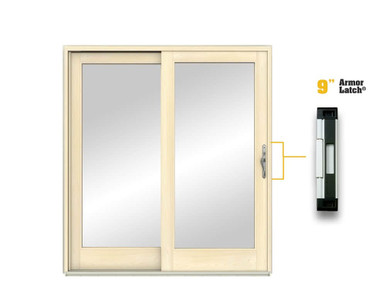
Door Armor's Armor Latch sliding door deadbolt, a supplemental lock that blocks the door from being forced open or lifted off its track
Step 4: Drill Pilot Holes (If Needed) [Time: 5 minutes]
If drilling new holes, start with a smaller pilot bit to prevent frame splitting. Drill slowly and steadily, keeping the drill perpendicular to the frame. Drill only as deep as necessary.
Step 5: Install the New Lock [Time: 5 minutes]
Position the new lock assembly and insert screws through mounting holes. Tighten screws gradually in a cross pattern to prevent uneven pulling. Don't over-tighten.
Step 6: Test the Lock Mechanism [Time: 2 minutes]
Slide the door fully open and closed while testing the lock at each position. It should engage smoothly without resistance. If you feel grinding or resistance, check that the lock is properly seated.
Key Takeaway A properly installed sliding door lock should require deliberate action to engage and disengage. If it feels loose, adjust before considering the job complete.
Reinforcing Glass and Frames Against Forced Entry
Security film is the most practical glass reinforcement for existing sliding glass doors. This transparent adhesive layer bonds to the interior surface, holding shards together if glass breaks. An intruder would need to punch through repeatedly to create an opening large enough for entry.
Installation requires patience but minimal skill. Clean the glass thoroughly with a lint-free cloth. Measure and cut the film to size, leaving a half-inch margin from the frame edge. Spray the glass with soapy water, then slowly peel and apply the film while smoothing out air bubbles. The process takes 30-45 minutes per door.
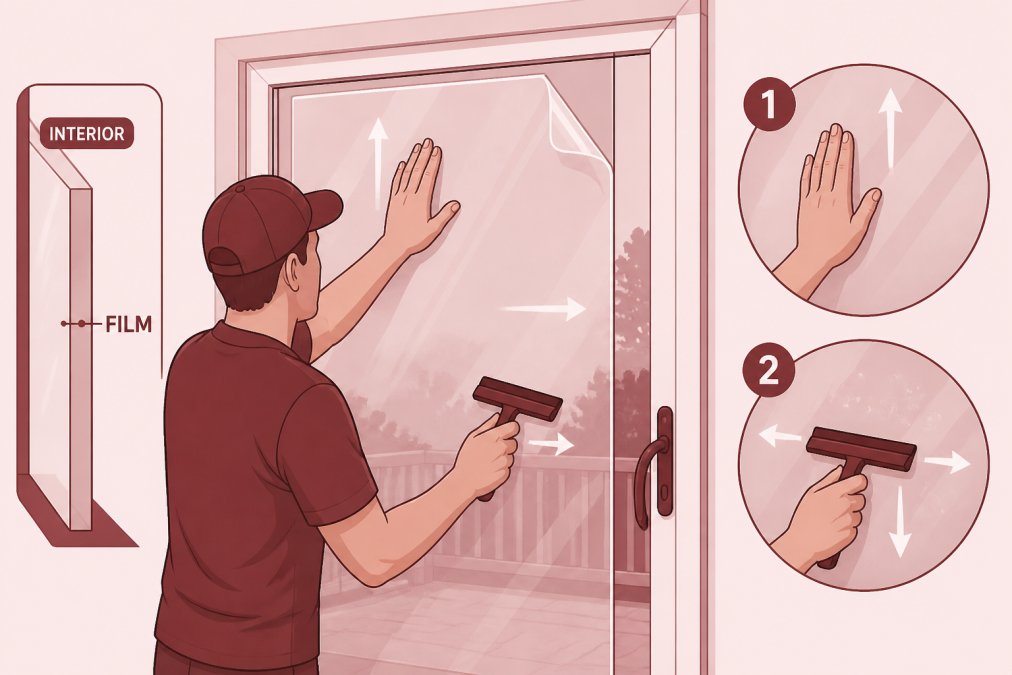
Homeowner carefully applying transparent security film to the interior surface of a sliding glass door, showing hands smoothing the protective layer and removing air bubbles with a squeegee tool
Frame reinforcement addresses the vulnerability of the frame being pried away from the wall. Steel reinforcement plates mounted to the frame and wall studs prevent this attack vector. Installation requires drilling into the frame and wall structure; professional installation is worth considering to avoid mistakes.
A practical approach combines security film with impact-resistant glass replacement if you're already planning door maintenance. Impact-resistant glass is designed to withstand significant force without breaking.
Inspect the frame for gaps between the frame and wall. Caulk or weatherstripping can seal minor gaps, though significant gaps indicate structural issues requiring professional assessment.
Watch Out Never rely on glass reinforcement alone. Combine glass reinforcement with mechanical locks, security bars, and monitoring systems for comprehensive protection.
Sliding Door Security Sensors and Smart Home Integration
Contact sensors detect when a door opens or closes. Magnetic reed switches are the most reliable type; a magnet on the door triggers a switch on the frame when they separate. These integrate with smart home systems to send notifications to your phone when the door opens, whether you're home or away.
Smart home integration allows automated responses. When a contact sensor detects unexpected door opening at night, the system can trigger interior lights, sound an alarm, or send emergency alerts to your phone and local authorities. Some systems can even lock the door remotely.
Installation typically requires:
- Mounting the magnet on the moving door panel
- Mounting the switch on the stationary frame
- Ensuring proper alignment so they separate when the door opens
- Connecting to your smart home hub via app or manual pairing
Alignment is critical; misaligned sensors fail to trigger reliably. Most sensors include adhesive backing for quick installation, though screw-mounting is more secure long-term.
Sensors provide notification, not prevention. If your internet connection fails, wireless sensors lose connectivity. If power goes out, battery-powered sensors eventually drain. Smart home systems complement mechanical security but should never replace physical barriers like security bars or reinforced locks.
Pro Tip Test your contact sensors monthly by opening and closing the door while monitoring your phone for alerts. Non-functional sensors create false confidence.
Rental-Friendly Security Solutions for Sliding Glass Doors
Renters need security without permanent modifications that violate leases or forfeit security deposits. Effective rental-friendly options provide genuine protection without drilling or permanent installation.
Portable security bars are designed specifically for renters. These wedge-style devices fit into the door track and prevent sliding without hardware installation. They're typically aluminum or steel, weigh 5-10 pounds, and can be removed in seconds. While less secure than permanently mounted bars, they're significantly more effective than factory locks alone.
Door wedges and door jammers serve as secondary barriers. These wedge-shaped devices fit between the door and frame, preventing opening even if the lock is defeated. Quality door wedges are made from rubber or composite material and don't damage the frame.
Adhesive-backed contact sensors require no drilling. These wireless sensors mount with strong adhesive and can be removed cleanly when you move. If concerned about adhesive residue, test removal on a small area first.
Portable security film using static cling technology adheres to glass without adhesive, allowing removal without damage. While not as effective as permanent film, it provides some glass reinforcement for renters.
The layering approach works best: combine a portable security bar with a door wedge and contact sensors. This addresses the three main vulnerabilities without permanent modifications.
Best For Renters, temporary residents, and anyone needing security without lease-violating modifications. Portable solutions typically cost less and provide flexibility for future moves.
Document your door's condition before installing security devices. Take photos of the frame, track, and glass in their original state to protect yourself when moving out.
Maintaining Your Sliding Door Security System
Security systems deteriorate without maintenance. Regular inspection and upkeep ensure your sliding glass door security remains effective.
Track maintenance is foundational. Clean the track quarterly using a vacuum to remove loose debris, then wipe with a damp cloth. For stubborn buildup, use a soft brush. Dry the track completely to prevent rust.
Lubrication keeps the door operating smoothly while protecting against corrosion. Use silicone-based lubricant designed for door tracks; avoid oil-based products that attract dirt. Apply sparingly along the entire track, then slide the door back and forth to distribute. Wipe away excess.
Security bar inspection should happen monthly. Check that the bar is seated properly in the track with no gaps or movement. Verify mounting hardware hasn't loosened. Look for rust or corrosion on steel components.
Lock mechanism inspection involves testing operation at different door positions. The lock should engage smoothly without grinding sounds. If you notice changes, the lock may need lubrication or adjustment.
Contact sensor testing ensures your monitoring system remains functional. Test sensors monthly by opening and closing the door while monitoring your phone for alerts. Replace batteries in wireless sensors every 12 months.
Glass inspection for security film checks for peeling edges or bubbles. Small bubbles can be repaired by carefully lifting the edge and re-smoothing. Significant peeling requires film replacement.
Weather stripping inspection prevents gaps that compromise security. Check for cracks, gaps, or separation from the frame. Replace weather stripping that no longer seals properly.
Key Takeaway Most security failures result from neglect rather than design flaws. Thirty minutes of quarterly maintenance prevents degradation that turns an effective system into a liability.
Securing sliding glass doors is fundamentally about layering defenses. No single solution is foolproof, but combining mechanical barriers, smart monitoring, and consistent maintenance creates a security posture that deters opportunistic intrusions and buys critical time during emergencies. Door Armor's patented galvanized steel reinforcement system addresses core vulnerabilities while remaining invisible. Whether you choose professional installation or DIY reinforcement, the investment in sliding door security pays dividends in peace of mind and genuine protection.
| Security Method | Installation Time | Cost Level | Permanence | Best For |
|---|---|---|---|---|
| Security bars | 15-30 minutes | Moderate | Removable | All homeowners, especially renters |
| Upgraded locks | 20-30 minutes | Low-Moderate | Permanent | DIY-confident homeowners |
| Security film | 30-45 minutes | Low-Moderate | Semi-permanent | Budget-conscious homeowners |
| Contact sensors | 10-15 minutes | Moderate | Removable | Smart home users |
| Frame reinforcement | 1-2 hours | Moderate-High | Permanent | Long-term residents |
| Portable wedges | 0 minutes | Low | Removable | Renters, temporary solutions |
Frequently Asked Questions
Is there a way to make sliding glass doors more secure?
Yes. The most effective approach combines multiple layers: install a secondary locking mechanism, add a security bar or track blocker, apply security film to the glass, and integrate contact sensors for monitoring. This multi-method strategy addresses the three main vulnerability points, the latch, the glass, and the track, making forced entry significantly more difficult and time-consuming. For rental properties, focus on removable solutions like door jammers and portable security bars.
How do I secure a sliding door with no lock?
Install a sliding door lock kit, which typically includes a latch mechanism that screws into the frame. For immediate, no-drill solutions, use a security bar or wooden dowel placed in the track to prevent the door from sliding open. Contact sensors can alert you to tampering. Combining a basic lock with a track blocker provides both physical security and notification capability, addressing both forced entry and unauthorized access.
What is the best locking mechanism for a sliding glass door?
A deadbolt-style sliding door lock offers the strongest security because it extends deep into the frame, resisting prying and lifting. However, the most effective setup uses a secondary lock paired with a track blocker or security bar. This combination prevents both lateral movement and vertical lift attempts. For renters, removable locking bars and door jammers provide comparable protection without permanent installation, making them ideal for temporary security upgrades.
Can I install sliding door security upgrades myself, or do I need professional help?
Most sliding door security upgrades are DIY-friendly and require only basic tools: a drill, screwdriver, and measuring tape. Security bars, locks, and sensors typically install in under 30 minutes. Start by measuring your door frame precisely and following manufacturer instructions step-by-step. If you're uncomfortable drilling or have older frames, professional installation is available, but it's rarely necessary for standard residential doors. Always test your installation before relying on it for security.