



Why Front Door Security Matters
Your front door is the first line of defense against forced entry. Most break-ins happen through doors, not windows. The difference between a weak entry point and a reinforced one can be the critical time you need to call for help or reach safety.
You don't need a new door to stop a kick-in. Reinforce the weak points attackers target: the frame, hinges, and strike plate.
This guide covers specific reinforcements that work, how to install them, and which options fit your situation.
Pro Tip: The most common weak point isn't the door itself, it's the strike plate and frame. Upgrading these two components stops most forced-entry attempts.
How to Prevent Door Kick-Ins with Strike Plate Reinforcement
Door kick-ins happen because the strike plate pulls away from the frame. Standard strike plates use short screws that only grip the surface; when force is applied, they rip out.
Use longer screws that reach the structural framing behind the door frame, transferring force from the weak surface to solid wood. Reinforcing the strike plate solves the biggest vulnerability.
During a typical kick-in, the lock holds but the strike plate flexes and screws rip out. A reinforced strike plate anchors deep into structural framing, making the door part of the house's skeleton.
Key Takeaway: Strike plate reinforcement is the single most effective upgrade you can make. It stops forced entry at the point where doors fail.
How to Install a Security Strike Plate and Reinforce Your Door Frame
Installing a reinforced strike plate takes about 15 minutes and requires basic tools. Here's the process.
What You'll Need:
- Drill with bits
- Screwdriver
- Tape measure
- Pencil
- Longer screws (3 to 3.5 inches)
- Reinforced strike plate (optional but recommended)
Step 1: Remove the Old Strike Plate Unscrew the existing strike plate from your door frame. Keep the screws, you may need them later.
Step 2: Measure and Mark New Holes Measure up from the existing holes. Mark new positions that will reach deeper into the frame. Aim for holes that go through the frame and into the solid wood behind it.
Step 3: Drill Pilot Holes Drill small pilot holes at your marked positions. This prevents the wood from splitting when you install screws.
Step 4: Install Longer Screws Use 3 to 3.5-inch screws instead of the standard 1-inch ones. These screws anchor into the structural framing, not just the surface.
Step 5: Install the Reinforced Strike Plate Attach your new strike plate using the longer screws. Make sure it sits flush against the frame with no gaps.
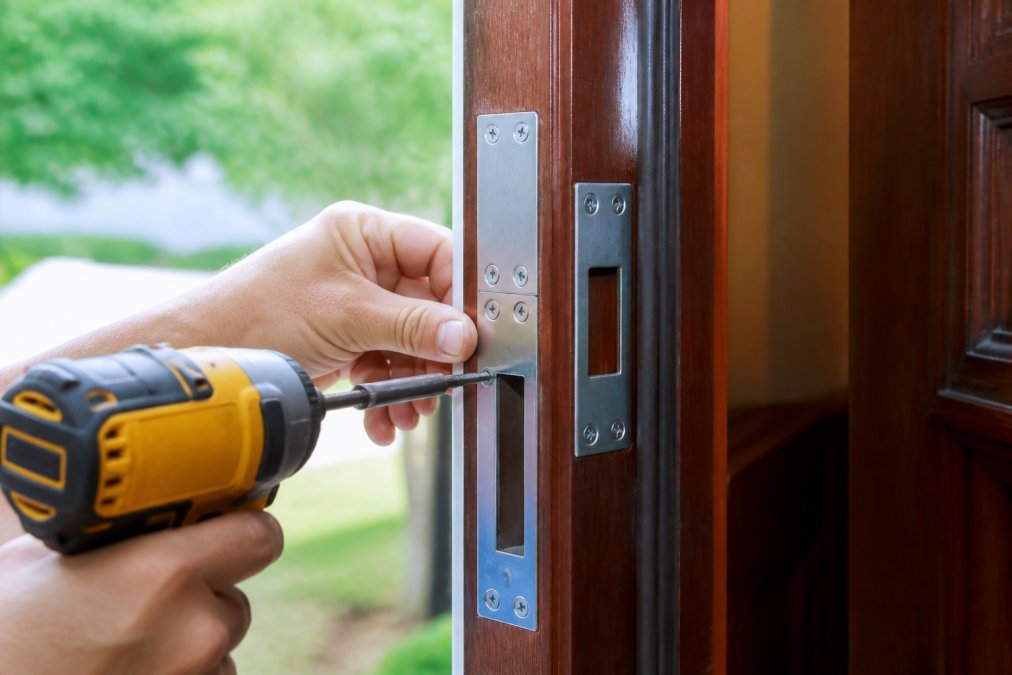
Close-up of hands installing a galvanized steel strike plate and reinforcement hardware on a wooden door frame, showing the drill, screws, and positioning of the components
Step 6: Test the Installation Push on the door frame near the strike plate. It should feel solid with no flex or movement.
Watch Out: Using standard 1-inch screws is the most common mistake. They only grip the frame's surface and will pull out under force. Always use 3-inch or longer screws that reach the structural framing.
Door Security Reinforcement Kit Options for Your Existing Door
The right reinforcement kit depends on your door's material, frame condition, and DIY comfort level.
3 Fast Steps to SECURE your Doors Now - EASY DIY Door Security Upgrades to STOP forced entry — video by Frakking Creations
Understanding Your Door Type Before Choosing a Kit
Solid Wood Doors accept longer screws without splitting and allow deep hardware anchoring. Strike plate upgrades, hinge reinforcement, and frame bracing all work reliably. Installation is straightforward for homeowners with basic tools.
Hollow-Core Doors require focus on frame and strike plate rather than the door panel. Professional installation is often worth the cost to avoid damaging the door.
Metal Doors require self-tapping metal screws or bolts, not standard wood screws. Verify any kit includes metal-compatible fasteners.
Composite or Fiberglass Doors accept standard screws but use slightly shorter ones to avoid splitting.
Door Armor Single Door Security Set →
DIY Installation vs. Professional Locksmith Installation
Strike plate reinforcement and hinge shields are DIY-friendly tasks taking 15-30 minutes with basic tools. However, consider professional installation for frame reinforcement kits (a locksmith can identify structural framing location), door bracing systems (require precise alignment), and lock replacement (eliminates misalignment risk). Cost: $150-$300 for professional frame work versus $0-$50 DIY; $75-$150 for professional lock replacement versus $20-$50 DIY.
Single Door Security Kits
Single-door kits address the strike plate, hinges, and frame with galvanized steel components for doors up to 1¾ inches thick. Installation takes 20-30 minutes. Verify fasteners match your frame material (wood screws for wood, self-tapping for metal).
Side Light and Double Door Kits
Side light doors require kits that anchor to the jamb face rather than jamb depth, costing $20-$40 more and taking longer to install.
Double doors lack a center jamb, so reinforce each independently.
Choosing the Right Kit for Your Situation
Identify your door type and frame material. Solid wood doors in standard frames work best with DIY single-door kits. Hollow-core or metal-frame doors benefit from professional installation. Side light or double doors require purpose-built kits.
Pro Tip: Before purchasing any kit, measure your door thickness and frame depth. Most kits work on doors 1⅜ to 1¾ inches thick. If your door is thicker or thinner, verify compatibility or consult a locksmith.
Reinforcing Hinges and Hinge Pins Against Prying
Hinges are the second major vulnerability. If an attacker removes the hinge pins, the door lifts off regardless of lock strength. Reinforce hinges by installing hinge shields (metal plates covering pins), using non-removable hinge pins (with set screws), or adding security hinges with locking mechanisms. All are cheap, quick upgrades.
Pro Tip: Most people forget about hinges entirely. An attacker who can remove the hinge pins can open your door regardless of the lock. Always reinforce both the strike plate and the hinges.
Adding Smart Locks and Video Doorbells for Access Control
Smart locks and video doorbells form a critical second layer of security, providing visibility, access control, and activity logging. Combined with reinforced strike plates and hinges, they create comprehensive security.
How Smart Locks Enhance Physical Security
A smart lock replaces your deadbolt's interior mechanism while keeping the exterior cylinder intact, so physical strength remains unchanged. Benefits include keyless entry (PIN, app, biometric), activity logs with timestamps, remote access, and smart home integration. Trade-offs: requires batteries (6-12 months) and WiFi or Bluetooth. Choose locks with physical key override and low-battery alerts.
Video Doorbells and Visual Deterrence
A video doorbell lets you see and speak with visitors before opening the door and records everyone who approaches. Visible cameras reduce break-in attempts (National Institute of Justice). Benefits include identity verification, evidence collection, and two-way communication without opening the door. Trade-offs: requires WiFi and power; battery models need charging every 2-4 months; cloud storage costs $3-$10/month. Inform guests they're being recorded.
Smart Lock Types and Their Trade-Offs
Deadbolt replacement locks are the most common type. They replace your interior deadbolt mechanism and work with your existing exterior lock cylinder. Installation takes 30-60 minutes if you're comfortable removing the lock assembly. Cost: $150-$400. These work with any door type and don't require structural changes.
Integration with Your Reinforced Door
The sequence matters: physical reinforcement first, smart technology second.
- Reinforce the strike plate and frame so the door can withstand forced entry attempts.
- Add hinge reinforcement to prevent pin removal.
- Install a smart lock for access control and monitoring.
- Add a video doorbell for visibility and deterrence.
This layered approach means that even if someone defeats the smart lock (by cutting power or hacking the system), the physical reinforcement still protects you. The smart devices add convenience and visibility without replacing the structural security that the reinforced hardware provides.
Choosing Between WiFi and Bluetooth Smart Locks
WiFi locks connect to your home network and can be accessed remotely from anywhere. They require a stable internet connection and are more vulnerable to network-based attacks, though reputable manufacturers use encryption. Cost is typically $200-$400.
Key Takeaway: Smart locks and video doorbells are powerful tools for monitoring and controlling access, but they depend on power and connectivity. Always maintain a physical key backup and ensure your door's physical reinforcement is in place first. Smart technology enhances security; it doesn't replace it.
Renter-Friendly Security Upgrades You Can Take With You
If you rent, permanent modifications aren't an option. But you still need security. Renter-friendly upgrades use removable hardware that doesn't damage the door or frame.
Portable door reinforcement systems work by:
- Using adhesive or removable fasteners instead of screws
- Bracing the door from the inside
- Adding temporary strike plate reinforcements
Conclusion
Upgrading front door security without replacing the door is practical, affordable, and effective. Strike plate reinforcement stops most forced-entry attempts. Hinge reinforcement closes another major vulnerability. Smart devices add monitoring and control.
Frequently Asked Questions
How do I know if a door security reinforcement kit actually stops real break-ins?
Door security reinforcement kits are tested against forced entry by addressing the weakest points: the strike plate, door frame, and hinges. Products like Door Armor include a $500 Lifetime Guarantee against kick-ins and are police-tested and recommended. The system uses galvanized steel to reinforce where doors fail during forced entry attempts. Real-world effectiveness depends on proper installation and using long screws that anchor into the door frame studs, not just the surface.
Can I install a door security reinforcement kit myself, or do I need a professional?
Most door security reinforcement kits are designed for DIY installation and can be completed in under 30 minutes with basic tools like a drill and screwdriver. Installation typically involves drilling pilot holes, positioning the reinforcement hardware, and driving screws into the door frame. If you're uncomfortable with drilling or your door frame is damaged, professional installation is available. Always follow the manufacturer's instructions and ensure screws penetrate into the frame studs for maximum strength.
Will a security strike plate work if I'm renting my home or apartment?
Many security upgrades are renter-friendly if they're non-destructive or removable. Renter-friendly alternatives include door wedges, portable door bars, and smart locks that don't require permanent installation. Check your lease and get landlord approval before installing any hardware.
What's the difference between a visual deterrent and actual physical protection for my front door?
A visual deterrent like visible security cameras or alarm system signs may discourage casual burglars but won't stop a determined attacker. Physical protection, reinforced strike plates, solid door frames, and security hardware, actually resists forced entry by strengthening the structural weak points. The most effective approach combines both: reinforcement hardware that stops kick-ins and prying, plus visible security measures that encourage intruders to target easier homes instead.