



Door Security Alternatives That Actually Stop Forced Entry
Most homeowners think a deadbolt is enough. It isn't. The weak points in your door aren't the lock, they're the frame, hinges, and strike plate. When someone kicks your door, they're breaking the frame, not the lock.
According to National Institute of Justice crime prevention research, forced entry through doors accounts for the majority of residential break-ins. Door security alternatives need to address the actual vulnerability: structural integrity. At Door Armor, we've spent over 20 years analyzing how doors fail. The pattern is consistent: standard installations use screws that are too short, hinges that aren't reinforced, and strike plates that separate from the frame under pressure.
This guide covers practical alternatives you have right now, from physical reinforcement to smart systems to behavioral deterrents. We'll show you what actually works, what's rental-friendly, and how to layer multiple approaches for real protection.
Physical Door Reinforcement vs. Smart Lock Technology
Smart locks give you remote access and monitoring. Physical reinforcement prevents forced entry entirely. You need both, but they solve different problems.
Smart locks are convenient and let you unlock your door remotely, see who's at your entry point, and get alerts when someone tries the lock. But a smart lock does nothing when someone kicks your door. The deadbolt may be electronic, but the frame is still weak.
Physical door security alternatives, strike plate reinforcement, hinge shields, door jamb bracing, address the structural problem. They make it harder to kick the door open, buying time to call for help or move to safety. A reinforced door stops a casual break-in attempt. A reinforced door with a smart lock and monitoring stops almost everything.
The best approach layers both: install physical reinforcement first, then add a smart lock for convenience and monitoring. This combination is what security professionals recommend.
Key Takeaway: Physical reinforcement stops forced entry. Smart locks add visibility and convenience. Together, they create a complete defense.
How to Reinforce a Door Frame Against Kick-Ins
Reinforcing a door frame against kick-ins means strengthening three critical points: the strike plate, the hinges, and the door jamb itself.
Strike Plate and Hinge Reinforcement
The strike plate is the metal piece on the frame where the deadbolt sits. Standard strike plates use short screws that don't reach the structural stud behind the frame. When someone kicks the door, the strike plate pulls away from the frame.
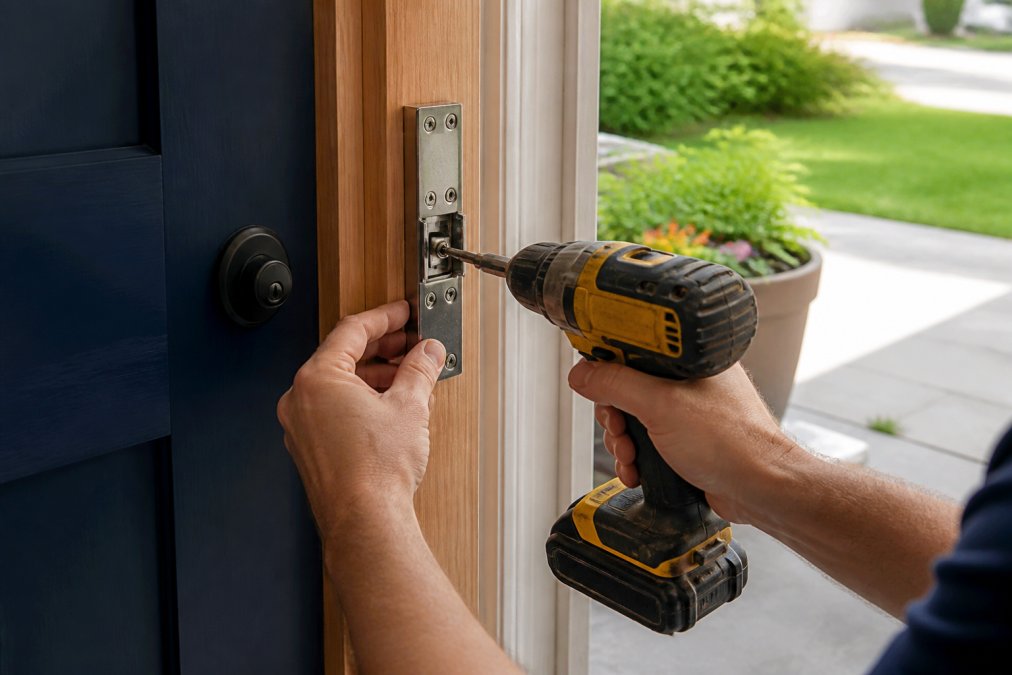
Homeowner's hands installing a strike plate reinforcement kit on a wooden door frame, using a drill with a metal reinforcement bracket visible against natural wood
Reinforced strike plates use longer screws, at least 3 inches, that go through the frame and into the stud, creating a rigid connection. Door Armor's approach uses galvanized steel reinforcement that covers the vulnerable area and distributes force across a larger surface.
Hinges are equally critical. Standard hinge screws often don't reach the stud. If someone kicks near the hinges, the hinge screws pull out and the door swings open. Reinforced hinge shields extend reinforcement across the top and bottom of the door frame, ensuring the hinges can't be forced.
Entry Point Vulnerability Assessment
Before you install anything, assess your specific vulnerabilities. Walk around your home and check each exterior door.
Look at the strike plate. If you can see short screws, they probably won't hold. Push on the door frame near the lock. If it flexes, the frame is weak. Check the hinges and look for gaps between the frame and the wall. Check whether the door is solid wood or hollow-core; hollow-core doors offer almost no resistance.
Most reinforcement takes 30 minutes to an hour per door. You need a drill, screwdriver, and the reinforcement kit. Door Armor's single-door kit includes everything and costs $79.00. Installation is straightforward for DIY.
Pro Tip: Test your door frame before installing reinforcement. Push hard on the frame near the lock. If it flexes more than a quarter inch, the frame is weak and needs reinforcement.
Securing Sliding Glass Doors in 2026
Sliding glass doors don't have a traditional jamb or strike plate. The lock is often weak, and the door can be lifted off its track. Standard door security alternatives don't work here.
The Armor Latch Sliding Door Deadbolt ($39.99) uses a heavy-duty locking mechanism that prevents intruders from lifting the door off its track. This is the critical vulnerability with sliding doors. A deadbolt needs to prevent both horizontal sliding and vertical lifting by anchoring rigidly to the frame.
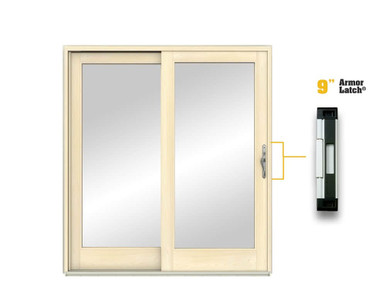
For sliding glass doors, also consider a door bar or brace. This physical bar sits in the track and prevents the door from sliding open. It's low-tech, always works, and requires no power or maintenance. Consider adding security film that holds glass together if it breaks, which slows intruders and makes noise.
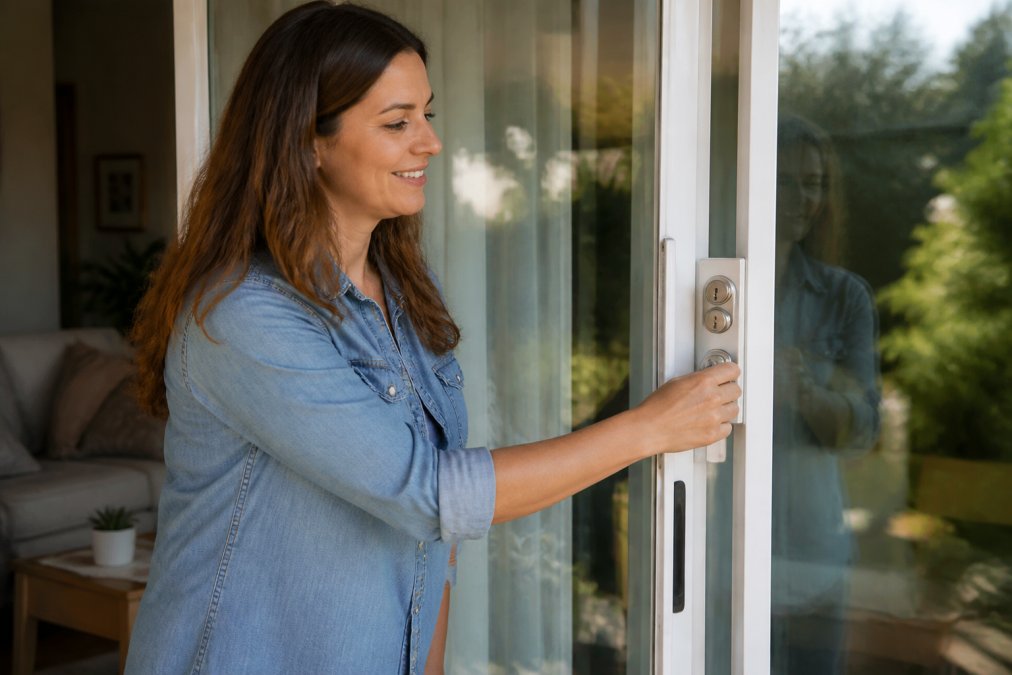
A sliding glass patio door with a reinforced deadbolt lock installed and engaged, showing the metal locking mechanism against the glass frame in afternoon sunlight
Best Door Security Bar for Home Protection
A door bar or brace is one of the most effective door security alternatives because it's passive. It doesn't require power, batteries, or maintenance. A door bar sits in the track of a sliding door or wedges against the inside of a swinging door, preventing it from opening.
The advantage is that a bar is immediately visible, which deters intruders looking for easy targets. The disadvantage is that it blocks normal use, you must remove it every time you want to open the door. For a back door or patio door you rarely use, it's ideal. For emergency egress, a bar can be a liability.
Door Armor's Double Door Security Kit ($149.00) includes the Night Lock door barricade system for double doors, which are particularly vulnerable because there's no center jamb.
Watch Out: If you use a door bar for security, ensure it doesn't block emergency exit. In case of fire, you need to open the door quickly. Practice removing the bar under stress.
Rental-Friendly Security Solutions for Temporary Protection
Renters need door security alternatives that are removable and don't damage the property.
Removable door bars are the best option. They sit in the track or wedge against the door without damaging anything. When you move, you take them with you. Portable door locks that fit under the door handle or in the door frame are another option. For sliding glass doors, a removable bar in the track provides strong security without permanent modification.
Smart locks are also renter-friendly if they don't permanently modify the lock. However, check your lease. Some landlords don't allow any modifications, even temporary ones.
The key for renters is choosing solutions that are removable and don't damage the property. Removable bars, portable wedges, and temporary smart locks work well without violating your lease.
Professional Monitoring vs. Self-Monitoring Systems
Once your door is physically reinforced, the question is whether to add monitoring. Professional monitoring means a security company watches your alarm 24/7 and calls police if it goes off. Self-monitoring means you get an alert and decide whether to call police.
Professional monitoring costs $20-40 per month. The advantage is that someone is always watching. The disadvantage is cost and the fact that police response depends on their availability.
Self-monitoring uses your smartphone for immediate alerts. You can see what's happening via a camera and decide whether to call police. This is free or very cheap. The advantage is immediate information and control. The disadvantage is that you must respond.
A hybrid approach works well for most homeowners. Use a smart lock with local alerts for immediate notification. For a vacation property or home you leave for extended periods, add professional monitoring. Smart locks with cellular backup ensure you're never without information about your door, even if home internet is down.
Key Takeaway: Physical reinforcement works without power. Smart monitoring gives you visibility and control. Use both for complete protection.
Conclusion: Choosing the Right Door Security Alternative
Your doors are the primary entry point for intruders. Securing them is the foundation of home security. The best door security alternatives combine physical reinforcement with smart monitoring.
Start with a security audit. Walk around your home and identify weak points. Check strike plates, hinges, door frames, and the doors themselves.
For most homeowners, physical reinforcement is the first step. Door Armor's single-door kit ($79.00) addresses the most common vulnerabilities: weak strike plates, undersized hinges, and inadequate frame reinforcement. Installation takes 30 minutes and requires basic tools. The $500 lifetime guarantee backs the protection.
For sliding glass doors, the Armor Latch Sliding Door Deadbolt ($39.99) prevents lifting and forced entry. For double doors, the Door Armor Double Door Security Kit ($149.00) with integrated Night Lock provides comprehensive protection. For doors with side lights, the specialized Side Light Door Security Kit ($129.00) addresses the unique vulnerability of frames without a traditional jamb.
Layer your security: physical reinforcement first, then add a smart lock for monitoring and convenience. Consider professional monitoring for properties you leave unoccupied. Use visible security bars as psychological deterrents.
The goal is to make your home a harder target. Intruders want easy entry. A reinforced door, visible security measures, and monitoring systems tell them to move on. Door Armor has helped secure over 500,000 doors by addressing the actual vulnerabilities that lead to forced entry. Get started with Door Armor and protect your family and property with proven, police-recommended reinforcement that works around the clock.
Frequently Asked Questions
What is the best door security alternative if I already have a steel security door on my front entrance?
If your front door is already secured, focus your door security alternatives on vulnerable entry points like back doors and sliding glass doors. Many break-ins target secondary entrances that receive less attention. A sliding door deadbolt costs under $40 and reinforces a common weakness. For back doors, strike plate reinforcement or a security bar provides affordable protection. This layered approach secures your entire perimeter rather than over-protecting one entry point.
How effective are door security bars compared to other reinforcement methods?
Door security bars are highly effective psychological deterrents and physical barriers. They work best on sliding glass doors and French doors where they prevent lifting off tracks or prying. For standard hinged doors, strike plate reinforcement and hinge shields stop forced entry more reliably because they address the weak points where doors fail. The best door security bar for home use combines both: physical reinforcement on hinges and jambs, plus a visible bar on sliding doors to deter attempted entry.
Can I install door security reinforcement myself, or do I need a professional?
Most door security alternatives are designed for DIY installation and require no special tools. Strike plate reinforcement, hinge shields, and sliding door deadbolts typically install in under 30 minutes with basic screws and a drill. If you're uncomfortable with tools, installation services are often available locally. The advantage of DIY installation is that you maintain control over the reinforcement and can inspect the work immediately. Most kits include clear instructions and customer support if questions arise during installation.
What door security alternative is best for a rental property I own?
Rental properties benefit from removable, non-permanent security alternatives. Sliding door deadbolts, door jammers, and portable security bars don't require permanent installation and can move with you. For more permanent solutions, check your lease or rental agreement, many landlords allow strike plate reinforcement since it protects their property investment. Removable hinge shields and door reinforcement kits designed for temporary installation let you secure the property without violating lease terms. Document all improvements before leaving to protect your security deposit.